Environmental NeTworked Sensor (ENTS)
ENTS I: Usability improvements for visualization dashboard
- Topics: Data Visualization, Backend, Frontend, UI/UX, Analytics
- Skills:
- Required: React, Javascript, Python, SQL, Git
- Nice to have: Flask, Docker, CI/CD, AWS, Authentication
- Difficulty: Medium
- Size: Large (350 hours)
- Mentors: Colleen Josephson, Alec Levy, John Madden
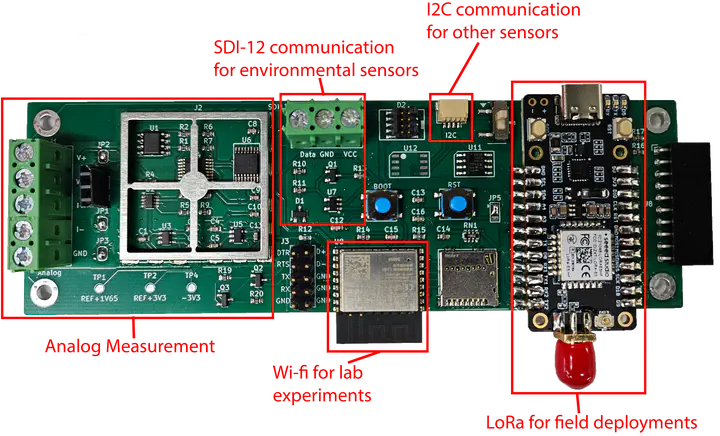
The Environmental NeTworked Sensor (ENTS) platform, formally Open Sensing Platform (OSP), implements data visualization website for monitoring microbial fuel cell sensors (see GitHub). The mission is to scale up the current platform to support other researchers or citizen scientists in integrating their novel sensing hardware or microbial fuel cell sensors for monitoring and data analysis. Examples of the types of sensors currently deployed are sensors measuring soil moisture, temperature, current, and voltage in outdoor settings. The focus of the software half of the project involves building upon our existing visualization web platform, and adding additional features to support the mission. A live version of the website is available here.
Below is a list of project ideas that would be beneficial to the ENTS project. You are not limited to the following projects, and encourage new ideas that enhance the platform:
- Drag and drop charts functionality
- Creation of unique charts by users (with unique equations)
- Customizable options of charts (color, line width, datapoint/line style, axis labels)
- Exportable charts (with customizable options)
- Saving layouts via url
ENTS II: Migration to TockOS
- Topics: Embedded system, operating system
- Skills:
- Required: Rust, C/C++, Git, Github
- Nice to have: STM32 HAL, python
- Difficulty: Hard
- Size: Large (350 hours)
- Mentors: Colleen Josephson, John Madden
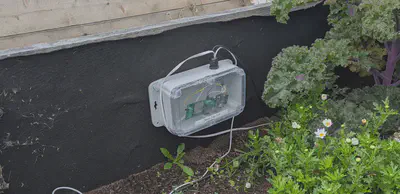
The current version of the hardware firmware is implemented in baremetal through the use of STM hardware abstraction layer (HAL) drivers. We are interested in porting the firmware implementation to an operating system (OS) to allow for additional functionality to support environmental data logging. TockOS is an embedded operating system designed for running multiple concurrent, mutually distrustful applications on low-memory and low-power microcontrollers that will be used. TockOS allows for OTA updates, dynamic app loading, hardware multiplexing, and more. We envision multiple users utilizing shared ENTS hardware that provides communication and measurement capabilities. Thus, the initial cost of deploying wireless sensor networks is reduced.
The TockOS kernel is written in Rust to enhance security. Userspace apps can be written in either C, C++, or Rust. Development will be done through a remote development server to access the hardware. See the following repos for the current status of the project:
- Userspace library: libtock-c
- Kernel: tock
- Baremetal: ENTS-node-firmware
Scope of work:
- Writing kernel peripheral drivers.
- Done entirely in Rust.
- Low-level understanding of microcontroller
- Basic kernel functionality knowledge.
- Porting baremetal components to userland apps.
- Involves porting STM HAL calls to TockOS syscalls.
- Primarily done in C.
- Understanding of syscalls.

Colleen Josephson
Assistant Professor at UC Santa Cruz
My name is Colleen Josephson, and I research wireless communication and sensing systems, with a focus on how we can leverage sensing for sustainability. I am an Assistant Professor at UC Santa Cruz, and a research scientist at VMware. I also chair the Societal and Economic Needs working group and co-chair the GreenG Working Group within the ATIS NextG Alliance. I received my PhD in Electrical Engineering at Stanford in 2020. My advisors were Sachin Katti and Keith Winstein.