OCEAN: Improving the infrastructure to enable memory hierarchy optimizations

Wow, how time flies! It’s been two months since introducing my project for OSRE'26! In my initial post, I highlighted the need for simulator infrastructure to enable memory hierarchy studies and I set out to do this by firstly improving the infrastructure of OCEAN. I did this primarily by improving the statistics OCEAN collects during simulation, adding CI/CD tests to ensure correctness, and allowing kernels/images to be brought up by users.
Progress
Dumping OCEAN’s Statistics
Since starting the GSoC project, OCEAN was missing functionality to add stat de- scriptors to a file and log the values at some given interval for bookkeeping. The CXLMemSim src provided in the repo actually has some functionality to log, but this is done roughly every 100k operations and does not capture the output to any file. I have improved upon this by adding a knob to tune how frequently stats get changed. If 1there is no interval, then there is just one cumulative dump at the end of the file. The outputs are logged to a server.log file by default.
Building an image and kernel from scratch
Setting up OCEAN takes significant effort, as you have to run several setup
scripts and obtain fairly large kernel and image files. While you can
certainly download the the kernel and disk images, per OCEAN’s
README, there are users
who would like to compile their own images and kernels. Using a fork of the
Linux kernel the packer
script takes this, compiles it, and produces a bzImage artifact, which is
used by OCEAN’s launch scripts. This is not yet public, but will be pushed by
the end of the summer!
CI/CD Pipeline
One of the main things that OCEAN lacks is validating the disk and kernel images are set up correctly. To ensure this is the case, I’ve implemented CI/CD tests which do the following:
./script/setup_host.shis ran and ensures that any prerequisites (e.g., packages, successful compilation of QEMU) are completed before running any experiments./script/setup_network.shis ran and ensurennumber of VMs are supported and IP interfaces are available for the VMs.qemu.imgandbzImageare downloaded. Using the launch scripts,qemu.imgis booted and configured so SSH access is enabled to transfer necessary programs.qemu.imgis also duplicated to `qemu1.img and this copy has its’ hostname changed so mutli-host programs using CXL memory run to completion.- The CXLMemSim server is booted up with a 1GB CXL interface (i.e.,
./cxlmemsim_server --capacity 1024) alongside one two QEMU VMs the disk images we created. - When the VMs boot up, we inspect available devices and ensure that
/dev/dax0.0appears./dev/dax0.0is the CXL device that the VMs see and allows them to communicate with CXLMemSim. - Given that the VMs properly support CXL, an MPI workload (GROMACS) is launched to ensure communication works between two VMs.
Most of this has been largely validated to work; however given that OCEAN’s companion paper is slated to appear in Supercomputing 2026, it is worth coming back to these CI/CD tests and re-running similar experiments to the figures within the paper. Additionally, the kernel and disk image reconstruction mentioned above is not a part of the CI/CD tests and will be implemented before the end of summer.
Interleaving and Evaluation Studies
As mentioned, the tooling improvements will enable CXL interleaving studies to reduce the effects of the memory bottelneck. One potential approach to do this is to consider what if we placed CXL at different levels of the memory heirarchy (e.g., what if CXL acts as a cache or DRAM?). In this case, we might want to change caching strategies to improve performance (e.g., what kind of cache-line granularity is the best for each level? what data should we evict or prefetch?). While the initial proposal suggested going right into QEMU there, I am opting to use a systems-level library (libPGAS) and sketching an initial memory model to test this scheme. My approach to implement this has multiple steps:
- We need to consider the types of structures we’d want in a memory model (coherence, prefetching, cache-line granularity, coalescing, write policies)
- Once we implement the model, we need to make unit tests to evaluate the behavior of the model (i.e., does coherence behave the way we expect? if we implement a replacement policy like LRU, is it correct?
- Once the behavior is reasonable, how can we implement this into libPGAS, QEMU, and CXLMemSim?
Right now, I am at a very rough stage implementing the caching model and I have yet to touch many of the aspects described (e.g., prefetching policy). Towrads the end of the summer, I plan to evaluate this model; and, if time remains, implement this to the QEMU fork OCEAN uses.
Remaining Tasks
To summarize the above, there’s a couple of tasks that need to be done:
- Evaluating Tiering Memory Model: As described, I need to flesh out the model and create/run unit tests to validate behavior
- Intercepting Requests with QEMU/OCEAN: Once the model has been validated, I need to port over the behavior. While it is unlikely I will get this working in QEMU/OCEAN in time to survey the model under real workloads, as it requires heavy work, this is much more feasible than looking into the KVM counters from my initial proposal
- Finalize fixes and CI/CD tests: While most of the “infrastructure” is done, there are some pending fixes that will be completed before the end of the summer.
That’s all for now! Stay tuned for the final report where I’ll go through my final results and publish a repo which contains my findings/outcomes for the summer!
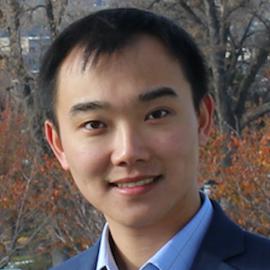
Luanzheng "Lenny" Guo
Computer Scientist, Pacific Northwest National Laboratory
Luanzheng (Lenny) Guo is a computer scientist in Pacific Northwest National Laboratory’s Future Computing Technologies group, working within the research area between scientific computing, data management, large-scale systems (e.g., HPC, CPS, Cloud, Edge, etc.), and machine learning (ML).